
Walmer Castle & Gardens
This week our Supervising Decoration Conservator Roger talks about how he and his team worked with English Heritage to match the colours of Walmer Castle during our recent contract as main contractor to conserve and refurbish this beloved castle…
Colour is very important at Walmer Castle. The castle has a vast array of colours throughout the property, which have been sympathetically updated from each custodian to the next. Though colours and finishes have altered through the years the main stalwart of the castle is the use of “Walmer Blue”. The colour, which is unique to Walmer was exceedingly difficult to colour match.
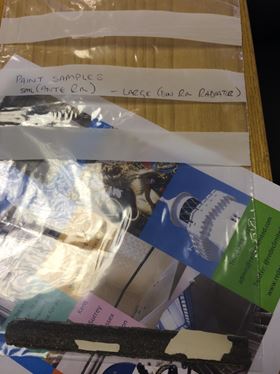
Various samples sent off for analysis
It was only in the middle of the last century that paints became industrialised for use. Popping down to your local hardware shop to purchase a tin of paint was not an option, so most people would engage an experienced decorator who mix the paint onsite (or at their yard) for the specific site they were working on.
It is also true that some large estates have interesting stories when it comes to the origin of ‘their’ colour; one such nearby example is Knole House in Sevenoaks (a National Trust property which Redec has also worked on), where the “Knole Blue” was a mixture of many leftover paints to form a ‘bluey-black’ colour that is seen throughout not only the house and grounds but also along Sevenoaks High Street. The likely origin of the Walmer Blue is likely a composite of colours used to satisfy the requirements of the then insitu Lord Warden and their family.
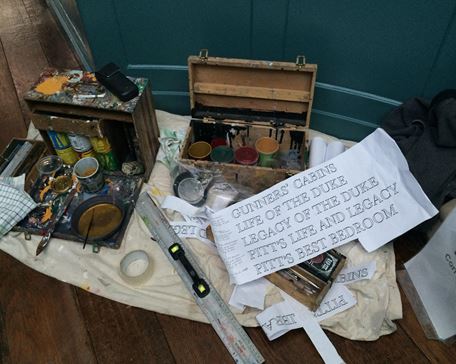
A decoration conservator’s tool box
The walls and panelling have been redecorated several times over the centuries with each coloration being slightly different from the last. Past redecorations were likely undertaken by the The Ministry of Works (1943 – 1970) and the Property Services Agency (1970-1996) whom would have likely used experienced decorators to match up the distinctive colour by eye; evidence of historic touching-up to the woodwork was evident in the corridor and rotunda.
For the 2015 refurbishment we decided to undertake a mix of modern and traditional techniques to discover the true makeup of the Walmer Blue. Initially it was within the project to match up the colours using Redec’s paint conservator and only touch-in the worst affected areas of damage to the corridor only. It was quickly decided that for the budget of undertaking this, we could match-up the colour and then redecorate the whole corridor rather than selecting just a few isolated areas.
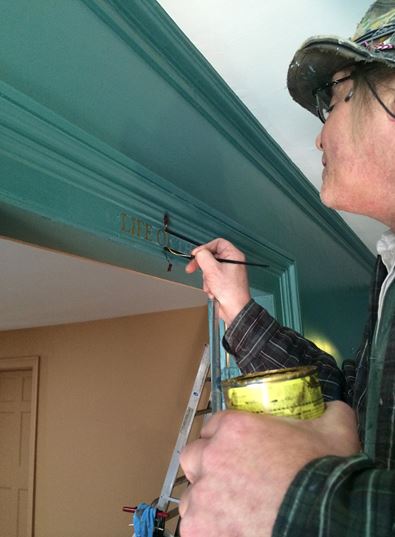
A Redec Decoration Conservator applies the final touches
Upon receiving this crucial decision, a call was made to leading UK colour expert Patrick Baty of London’s Papers & Paints Ltd. Patrick was briefed about the colour and requested samples of the paint work in various different locations were sent to his London office for analysis. In keeping with the past redecorations, the specification called for an oil-based eggshell to be used, which added time to the diagnosis of the colour due to the fact that oil-eggshell takes far longer to dry than a modern water-based paints. Initially the samples were placed under a microscope to see the composition of the paint. The samples’ stratigraphy (layers) and composition were all detailed and surveyed, these showed that the corridor area had received over 8 redecorations in the lifetime of the panels within the corridor, which were believed to date back to the 18th Century.
After which, using a variety of dark bases in this finish P&P crafted various samples daily to match the colour using the colour spectrum of the Munsell colour range, which is one of the widest colour ranges in the world. Daily updates were provided to English Heritage by onsite visits by our project manager (Chris) until finally the colour was identical to the samples received.
The big day came when on 16th December my team and I (as Supervising Decoration Conservator) received the paint matched to Patrick’s exacting formula from English Heritage’s preferred paint supplier ‘The Little Green Paint Company’. Quickly it became apparent that the colour had been matched absolutely perfectly. So well in fact that once areas had dried in the upper corridor, it was hard to tell where the new paint started and the old paint continued, other than the fact that the old paint was more worn from people traffic – on colouration alone they were identical!
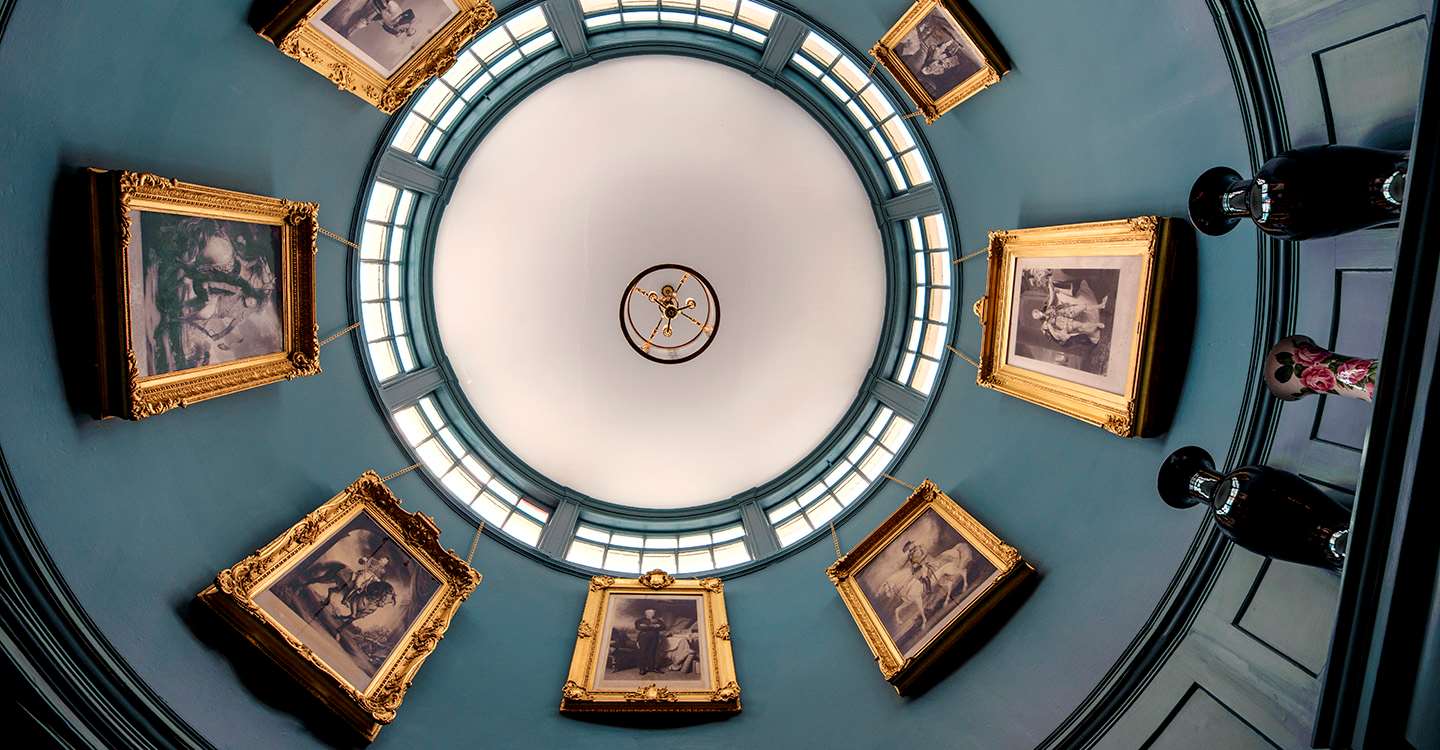
The works have returned the drama to the central rotunda of the main corridor. Photo copyright (c) English Heritage
Though colouration of Walmer Castle’s interiors were only a small part of our works onsite, it goes to show that the devil is always in the detail and nowhere is this more important than when you are tasked with conserving such an important building like this.
Walmer Castle is now open following our works with English Heritage to conserve and refurbish the main building, please see their website for opening times and prices: http://www.english-heritage.org.uk/visit/places/walmer-castle-and-gardens/
 Conserving, Restoring, Refurbishing & Redecorating