repairs

Insulating a local landmark…

IMG_7834

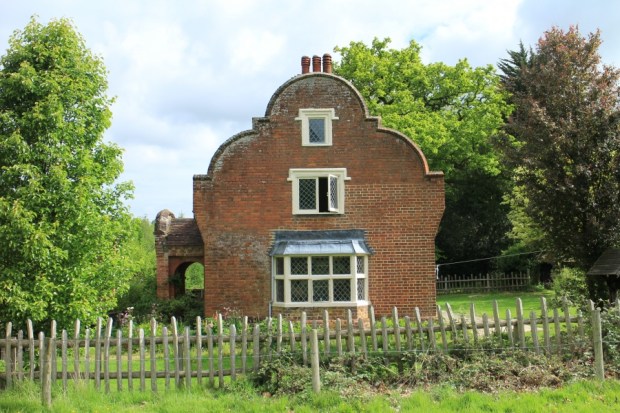
A beautiful example of vernacular Kentish architecture as influenced by the popular Dutch style originating from the 19th Century

Our small works team recently undertook the refurbishment of a Dutch-gabled Victorian gatehouse which is within the curtilage of a large country house near Ashford.  The property was in a state of dilapidation that had been expedited from historic condensation and previous poor workmanship.

goddinton_house_ashford

The main country house and grounds upon which the gatehouse is located within, photo: Kent Guides (c).


The aim of the project was to refurbish the building to a habitable state and to finally sort out the condensation issue once and for all.  The process proposed was to use an insulating wood fibre system but to install this via the internal faces of the building rather than the typical external faces method.  The internal face of the walls were lined with (the SPAB approved) ‘Warmshell Interior’ system of wood fibre by Lime Green.  After fixing, the boards were finished with a lime plaster to suit. ‘Warmshell Interior’ is a practical solution when fitting insulation to the outside of property cannot be achieved.  In this case, the building is apart of a country house’s estate and is therefore apart of the listing and also within a conservation area.  Due to this status we cannot alter or adapt the outside of the property, it wouldn’t be practical or in keeping with the architectural style of the building – therefore an internal system would have to be employed.
IMG_9186

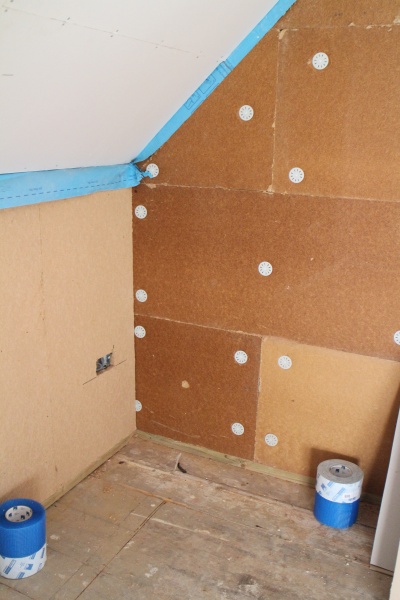
The insulation panels are installed

Both internal and external insulation methods have their challenges, and this was no exception.  Inside we had to move all sockets, switches, pipes, radiators, partitions and door frames plus building supports for the new insulation panels, along with all the necessary making good and conservation to the existing structural timbers.  It became a large undertaking but the final result was well worth it.
IMG_9179

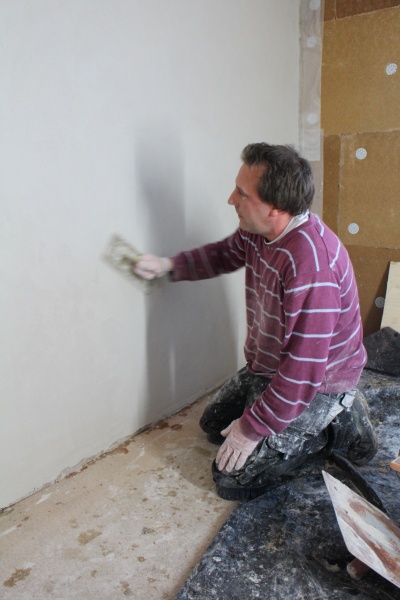
Redec Plasterer Mark gives the walls a final skim of lime plaster

Once all wall fixings and furnishings are moved or temporary disconnected, the Warmshell insulation boards are secured to the internal wall faces.  The insulation boards are cut to size and fixed into position (cables for sockets and light switches may need to be extended through the insulation, though this isn’t always necessary).  The wall insulation is plastered with lime and then decorated with a suitable breathable paint such as clay based or a limewash.  This whole system of insulation uses natural lime plasters, paints and wood fibre boards which allow the walls to breathe – which should overtime cure any condensation issues and work in tandem with the original historic fabric of the house.
IMG_6115

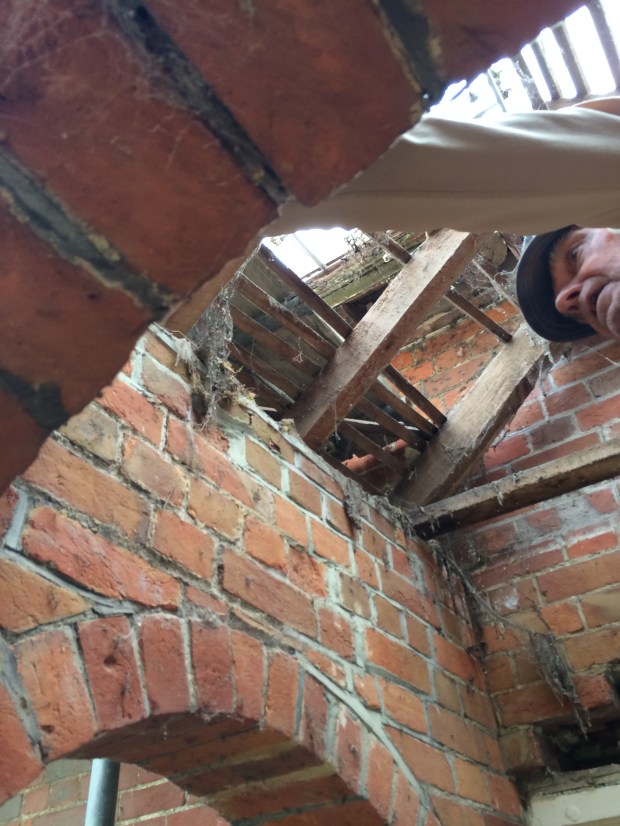
Redec Mason Len works to conserve the porch

The works also included installation of a new kitchen and bathroom, conservation repairs to windows and structural timbers, lime repointing and brickwork repairs throughout, sheep wool insulation to the loft, a full re-wire, installation of a complete new bay window, roof repairs, glazing replacements, redecoration and renewal of all floor coverings.  The works were supervised by Conker Conservation and approved by Ashford Borough Council’s Conservation Officer.
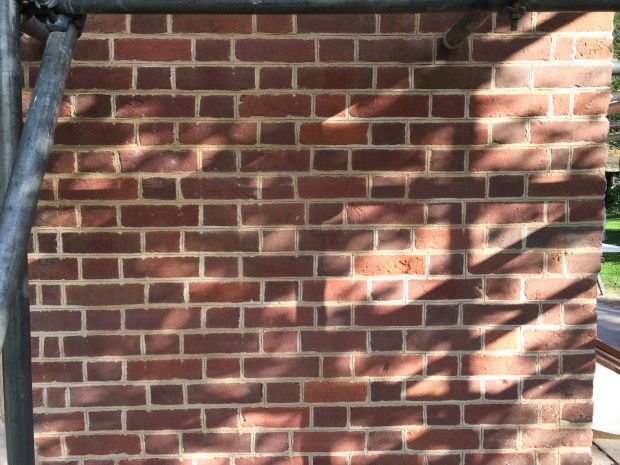
IMG_6208.JPG

A newly penny-pointed lime mortar wall – can’t see the difference between the new and the old pointing?  That’s the Redec quality difference right there!
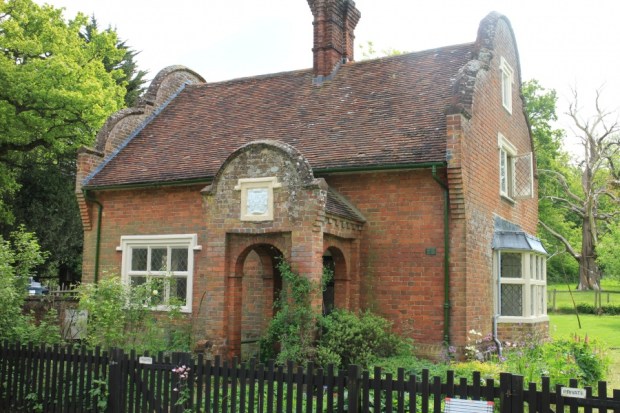
IMG_7832

The finished project

Walmer Castle Stone Works

This week we hear from our Stonemason Foreman Paul, who recently worked for REDEC’s busy Refurbishment department on Walmer Castle near Deal in Kent…

walmer 3

Scaffolding carefully going up to the problem areas.

During the works a number of leaks were found, these were traced back to two different windows. It was found that a combination of issues had caused the leaks; a box gutter that was getting overwhelmed during heavy rain and historic stone repairs that had been undertaken by the former keeper of the castle, the Ministry of Works.

walmer 4

The Architect first inspecting the in situ mortar quality

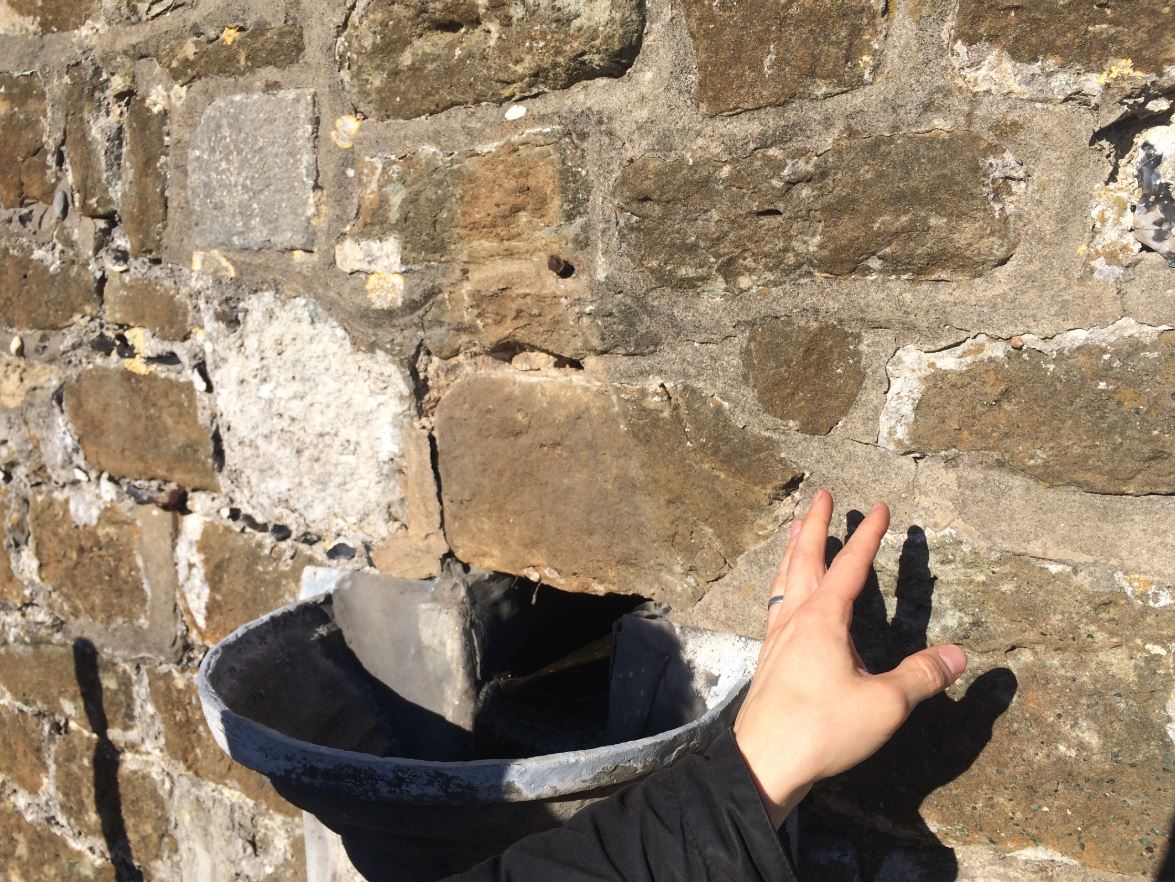
As you can see in the photo a number of stones had been repointed in a cementitious mortar. This form of mortar would have been relatively new to the market during the early to mid-20th Century and the dangers of using such mortar was not known at the time. The mortar dries far harder than lime mortar (which should be used), it prevents nature moisture from leaving the stones, which leads to frost damage and cracking and its removal can also damage the in situ stones.
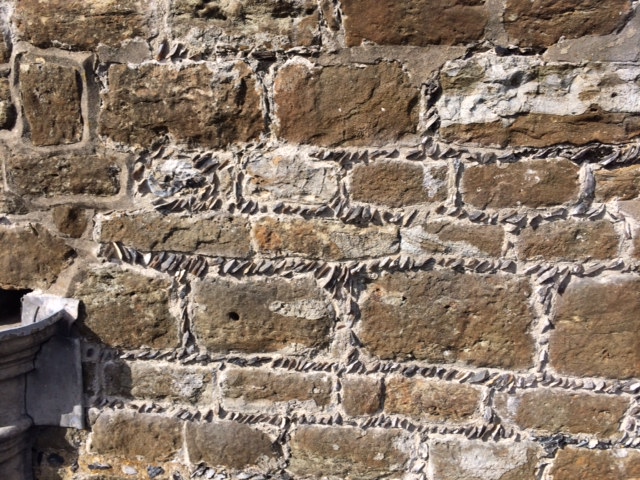
The other main issue with the cementitious mortar at Walmer is that it is not decoratively consistent. The original pointing was ‘galleted’, which calls for locally collected flints to be ‘knapped’ (cut into shards) and placed decoratively into the mortar beds. The ‘gallets’ are then stacked and cut to match the size of each respective stone in a decorative fashion. Part of our project here was to remove the faulty cementitious mortar, replace with a lime mortar (colour matched using ash and clay) and then ‘gallet’ throughout to match the mason’s patterns dating back to when the castle was originally built in the Tudor era.

walmer castle

Various photos showing the process at hand. Our excellent stonemason Rob is working around the lead hopper in the last photo.

The first task in repointing stonework is to accurately (to as far as reasonably possible) test what the makeup of the in situ mortar actually is. Sandberg LLP was appointed to test the mortar; they found that the mix used originally was a 1:1 mix of non-hydraulic lime and local sand. A similar mix was used, along with some fired ash and a hint of clay to colour the mortar to match the patina of the in situ mortar. Our stone masons used sand procured from a local supplier in Dover and added small quantities of the original mix back into the new mixes.

walmer

Our top notch stonemason Gary working hard to carefully remove the cementitious mortar

We then carefully removed the modern cementitious mortar, which luckily had not damaged the stones too much. Once the mortar had been mixed and the colour/finish approved by English Heritage and the Architect, the next task was to ‘knap’ the locally sourced flints to replicate the Tudor gallets. Knapping can take a considerable amount of time and can be very dangerous; fortunately our stonemasons are highly skilled for such tasks.
The finish as you can see below shows how well we matched the existing stonework and helped conserve this important scheduled ancient monument.

walmer castle

Paul our excellent stonemason had been with REDEC for over 9 years and first undertook his apprenticeship working on Westminster Cathedral some 30 years ago.

The system works…

This week we hear from our area contracts manager for East Kent, Leigh:

Clients not in the know often ask us ‘so what’s this window care system you use’? The overall system is actually called ‘Repair Care International’ and there are various techniques that can be used from this system, with the most commonly used one being ‘Dry Flex’.

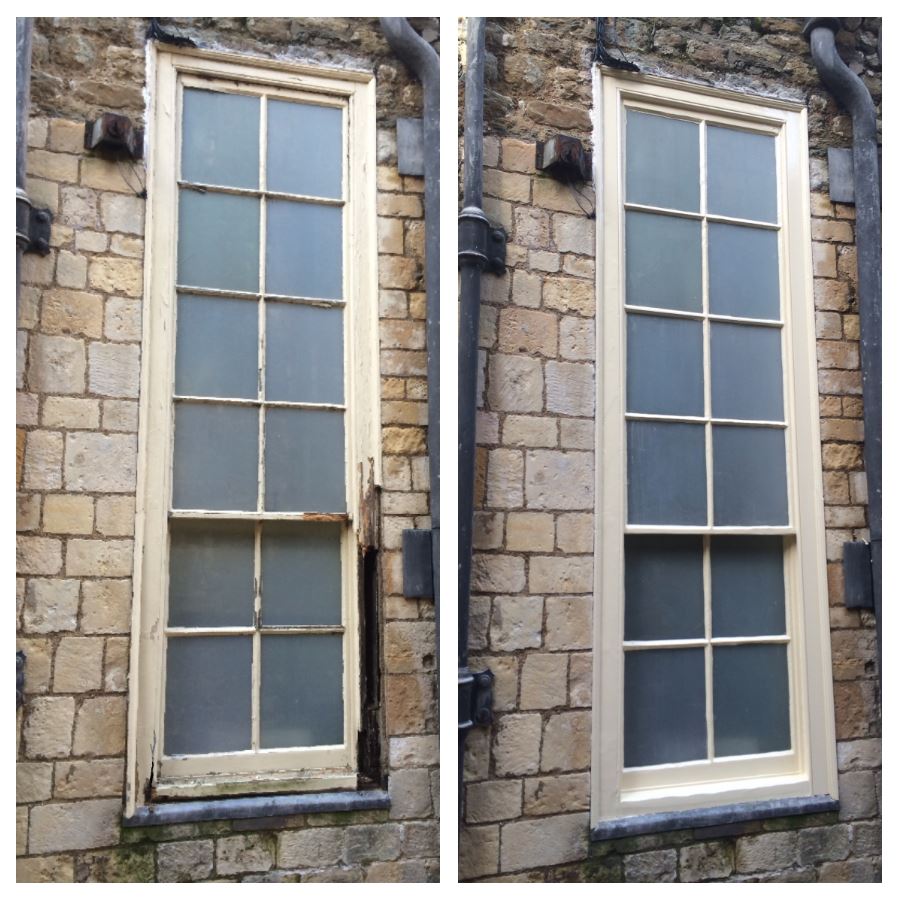
Before and after to a window, repaired using the Dry-flex system

Before and after to a window, repaired using the Dry-flex system


The system was developed over 20 years ago in Holland to replace traditional pre-paint joinery repairs, such as scarfing and splicing which are typically more expensive, more time consuming and frequently fail, leading to costly premature paint breakdown and further timber decay. A tradition scarf to a window exposed to the elements will likely fail in year three with decay spreading from water ingression from year five. However, the dry-flex system is guaranteed to last at least ten years if used by a qualified and approved contractor; for which Redec has been approved now for over twelve years.
A lot of clients say ‘well isn’t it just a wood filler’? And the answer is emphatically no, it behaves nothing like a traditional decorator’s filler. The key aspects of the system are:
• The product expands and contracts to the natural movement of the in situ timber.
• When applied correctly it will adhere to all types of timber.
• Can we done quickly around the weather.
• Becomes rain resistant within a few hours.
• Can be used both internally and externally.
• Has a ten year guarantee.
• It can be used on other substrates other than timber.
• Retains more of the historic fabric of a building.

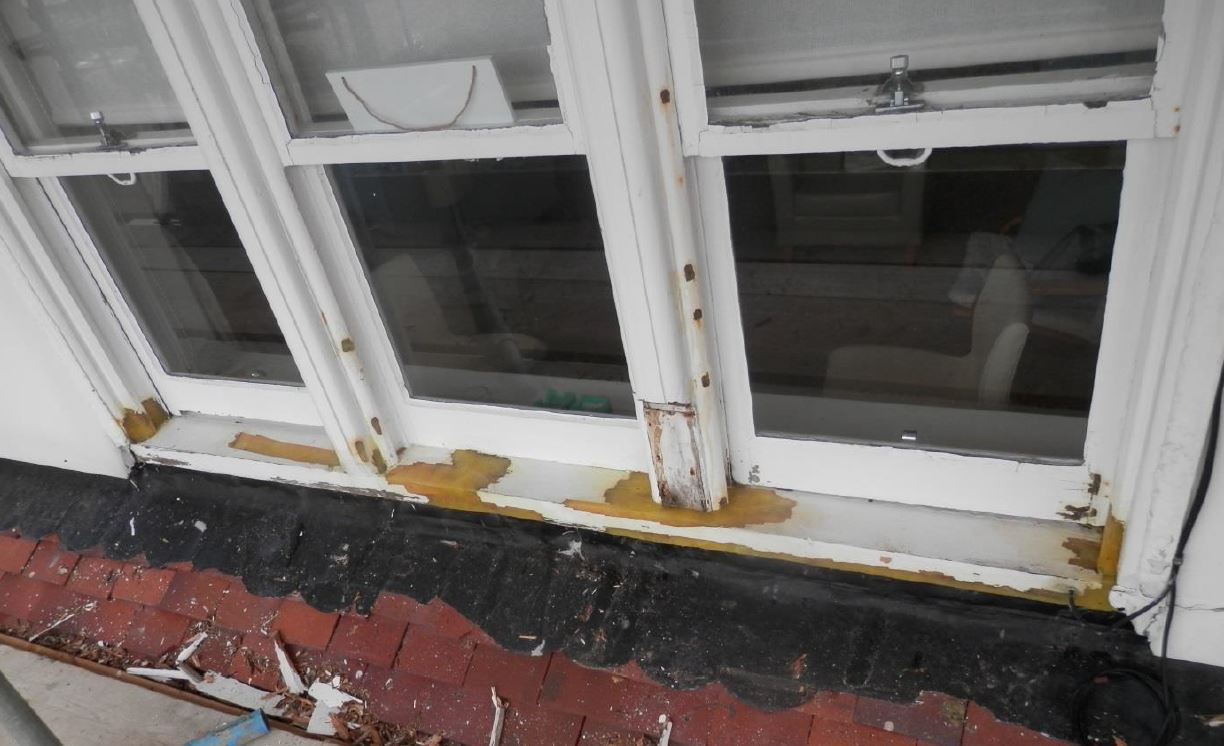
The Dry-flex system mid-use, showing how adaptable the system is.

The Dry-flex system mid-use, showing how adaptable the system is.

It is the later of these points that attracts a huge variety of clients. As a company we first became trained in the use of product whilst working for The National Trust. The Trust had been specifying the system for some years due to the system’s ability to prevent rot and retain as much of the original fabric of their large historic building portfolio as possible. Since then we have ensured all our repair staff have become approved for its use, making us one of the largest regional centres for its approved use in England. We have used it on scheduled ancient monuments, world heritage sites, listed buildings and everything else in-between.

For more information go to: http://www.repair-care.co.uk/

Leigh is our area contracts manager for East Kent, he has worked for Redec for over 20 years.